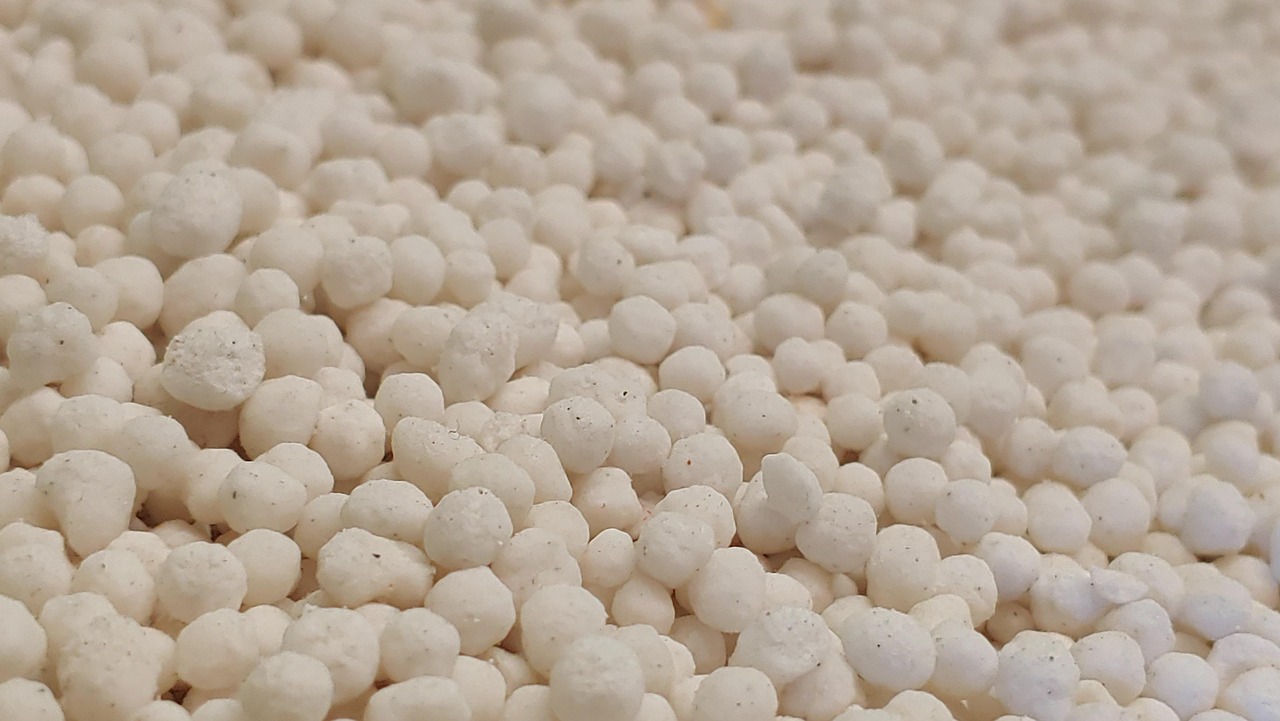
Fertilizer price surge threatens global food production – what does this mean for modern greenhouse farming?
In recent months, the global agricultural sector has once again been under significant pressure. Rising fertilizer prices and disruptions in supply chains, linked to geopolitical tensions in the Middle East, are already affecting farmers’ decisions worldwide. This marks the second major price shock in the past four years, but this time without the “safety net” of high crop prices.
For many producers, this creates a difficult dilemma: reduce fertilizer use or risk the financial sustainability of their production.
Why have fertilizers become a problem?
The Middle East plays a crucial role in global fertilizer production, especially nitrogen-based fertilizers. Due to ongoing conflicts, traffic through the Strait of Hormuz has been heavily restricted, causing serious disruptions in the supply of key raw materials such as ammonia, sulphur, and urea.
Urea, one of the most important nitrogen fertilizers, has seen the sharpest price increase. The loss of approximately one-third of exports from the Persian Gulf has led to nearly doubling prices in a very short time. At the same time, prices of agricultural commodities such as wheat are significantly lower than in previous years, further increasing pressure on farmers.
Less fertilizer = lower yields
Nitrogen fertilizers are essential for stable and high-quality crop production. Reduced usage directly impacts:
- lower yields,
- poorer crop quality,
- increased instability in food supply.
Early signs are already visible worldwide—from reduced planting areas in Australia to lower fertilizer use in Brazil and Europe.
What does this mean for the future of food?
Although there are no major short-term disruptions in supply (due to existing stockpiles), experts warn that serious consequences may emerge in the coming years. Countries heavily dependent on food imports will be most affected, but the impact will be felt globally.
The Solution: greater efficiency and control
In such conditions, optimizing resource use becomes critical. This is where modern agricultural approaches, such as advanced greenhouses, come into focus.
In greenhouses like those developed by Passivus, it is possible to:
- precisely control nutrient levels,
- reduce fertilizer losses,
- optimize growing conditions,
- achieve stable yields regardless of external conditions.
By using closed systems and smart nutrient management, dependence on fluctuations in global markets can be significantly reduced.
Sustainability: no longer a choice, but a necessity
The current crisis clearly highlights the vulnerability of global food production. Transitioning to more sustainable, efficient, and locally controlled production methods is no longer just a trend—it is a necessity.
The greenhouses of the future do not only mean higher productivity, but also greater resilience to global shocks—from raw material price volatility to supply chain disruptions.
At Passivus, we believe that the combination of technology, sustainability, and local production is the key to a stable food future.
Source: SPIRIT Slovenia